Anthilla
Edge Computing
EDGE COMPUTING AND ITS ADVANTAGES
Table of Contents:
WHAT DO THE TERMS USED FOR DIFFERENT “COMPUTING” TYPES MEAN?
Edge Computing, like Cloud Computing and Fog Computing are terms that define paradigms (models, example scenarios). In these paradigms, roles and dynamics are specified through which computers, networks, devices, and users exchange DATA and perform WORK.
The major distinction between these paradigms is:
- what happens locally and what happens remotely;
- with what priority, what weight, in what timeframes and what modes.
This determines in a clear and logical way, the PROS and CONS.
Every scenario has possibilities and limits, beyond what is stated by “advertising slogans“.
This is why they can be used together to overcome the limits of one or the other when necessary.
WHAT IS EDGE COMPUTING?
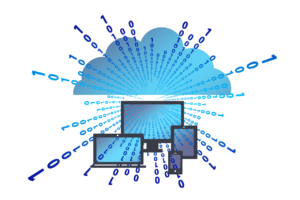
The English term edge computing refers to information processing at the edges of the network, or where data is produced.
“At the edges of the network” means “near where data originates,” i.e., locally or at least “nearby.”
THE BENEFITS OF EDGE COMPUTING
The main benefits of using edge computing, which is a paradigm opposite to the Cloud concept, are primarily the reduction of processing latency. This enables real-time responses (i.e., obtaining a response within a useful timeframe) and bandwidth savings, sending externally (external: “remotely,” or to external services like the Cloud) already-processed information, or only statistical or reporting data about the work performed. Since the work is done locally, potentially only the response or result can be sent, which is usually smaller in size.
The Edge Computing model can be used with any technology, for any need, especially those used for creating “smart objects” (Smart Objects).
In detail, the benefits that edge computing can ensure are several:
- it has the ability to process critical data locally, to later send it to a central repository (archive);
- it can help users access the data they need quickly, with less latency and without using much of the precious bandwidth;
- it can enable companies to provide near real-time data analysis;
- it enables data storage, making it always available, immediately;
- it is based (both edge and fog computing) on a distributed network of infrastructure that can be “internal” (local) or “nearby” (external, remote but localized), which is why it is more “shielded” from potential disruptions or at least balancing potential Cloud disruptions;
- reduction of bandwidth requirements and related characteristics — it is no longer the connection that must be extremely performant or have low latency, so a cheaper connection is needed. Or multiple cheaper connections.
This is precisely why edge computing enables applications and smart devices to respond almost instantaneously, eliminating delays or enabling higher quality of service, offering significant advantages for businesses.
DIFFERENCES BETWEEN EDGE AND FOG COMPUTING
Looking deeper, there is a difference between the concept of edge computing and that of fog computing, in many cases considered the same thing.
Although the term fog computing is often erroneously used to refer to edge computing architectures, there are actually key differences:
unlike edge computing, an architecture limited to specific roles and actions strictly related to processing operations,
fog computing has a much more structured and diversified organization, like a more complex network architecture, consisting of multiple elements (fog nodes) and capable of managing, beyond processing operations, also network, storage, control, and acceleration functionalities.
in fact, fog computing is structurally similar to the concept of cloud computing (which is structured to have an enormous amount of resources usable by a very high number of users, remotely, with non-high quality of service and some latency) but organized to be more autonomous, more compact, independent, and in proximity to the user, to provide guaranteed performance and privacy compared to the cloud.
The major difference between the two solutions lies in where the intelligence and processing capability is placed:
while in fog computing it is brought locally, at the LAN level (local area network or the company’s internal network, much like having servers on-premises) or in any case in a zonal network shared by multiple facilities, where data from sensors is processed by a fog node or an IoT gateway that can be regular computers serving that role using ad-hoc software technologies, in edge computing this intelligence and computational capability is integrated directly into the devices and processing platforms that interface with sensors and other control systems.
HOW IoT USES EDGE COMPUTING
IoT in recent years has been significantly leveraging Edge Computing, bringing data processing to the field.
Closer, therefore, to where information is actually collected: sensors, industrial systems, cameras, POS (point of sale), electricity, gas, water controls, and however many other smart devices can be imagined today connected to the cloud.
Smart devices are less suited to the conventional Cloud model and often face issues of reliability, cost, constraints, latency, and bandwidth.
Thanks to the characteristics and simplifications of edge computing illustrated in the previous section, edge presents itself as the winning solution, managing to bring data processing close to where it is collected, eliminating the limits and constraints present with Cloud Computing and enabling a higher level of service.
WHY IS EDGE COMPUTING NECESSARY?
Edge computing is necessary to manage the weak points of cloud-based applications and services in terms of performance.
In fact, cloud computing is not always able to meet the fast response time requirements demanded by critical applications.
For companies subject to government regulations related to data storage location, cloud computing may not be able to provide the type of local storage required.
IoT applications often require good bandwidth, low latency, and reliable performance, while also meeting regulatory and compliance requirements, making them ideal candidates for edge computing, but also for fog computing.
HOW ANTHILLA APPROACHES EDGE COMPUTING AND IoT
The evolution of cloud computing, namely edge computing and fog computing, enables shortening the distance between the user and the service and accelerating all interconnected operations.
With Hoplite, Anthilla leverages edge computing and fog computing for rapid, high-volume data processing near the source: reducing the required bandwidth usage, eliminating costs, and ensuring effective use of applications in remote locations.
Furthermore, the ability to process data without transferring it to the public cloud adds a useful layer of security for data management and privacy, necessary for businesses and individuals.
This is why Hoplite uses existing devices, extending intelligence and processing capability into devices, new or pre-existing, installed in the local IT environment.
Thanks to Hoplite, we enable our clients and their employees to leverage data to increase privacy, satisfaction, and efficiency.
Maximize the power of data to accelerate digital transformation, from device to data center.